Introduction: A Legacy Rebooted—But for Whom?
When Tencent’s TiMi Studio Group announced a new Delta Force title in 2023, the gaming world reacted with cautious optimism. The original 1998 Delta Force was a landmark in tactical realism—a slow, cerebral shooter that prioritized ballistics, terrain, and patience over spectacle. Could a Chinese developer, best known for Call of Duty: Mobile and Arena of Valor, honor that legacy while appealing to today’s free-to-play, live-service audience?
The answer, after nearly a year of seasonal updates, is… complicated.
Rebranded globally as Delta Force (though internally referred to as Hawk Ops in China), the game positions itself as a “tactical extraction shooter” blending PvE and PvP modes across large-scale maps. It borrows heavily from Escape from Tarkov, Squad, and even Battlefield, yet struggles to carve out a distinct identity. The result is a technically impressive but tonally conflicted experience—one that oscillates between hardcore simulation and casual accessibility, often to its detriment.
This review examines Delta Force not just as a game, but as a cultural artifact: a Western military franchise revived by an Eastern studio for a global market demanding both depth and dopamine.
Visuals & Performance: AAA Polish on Mid-Tier Hardware
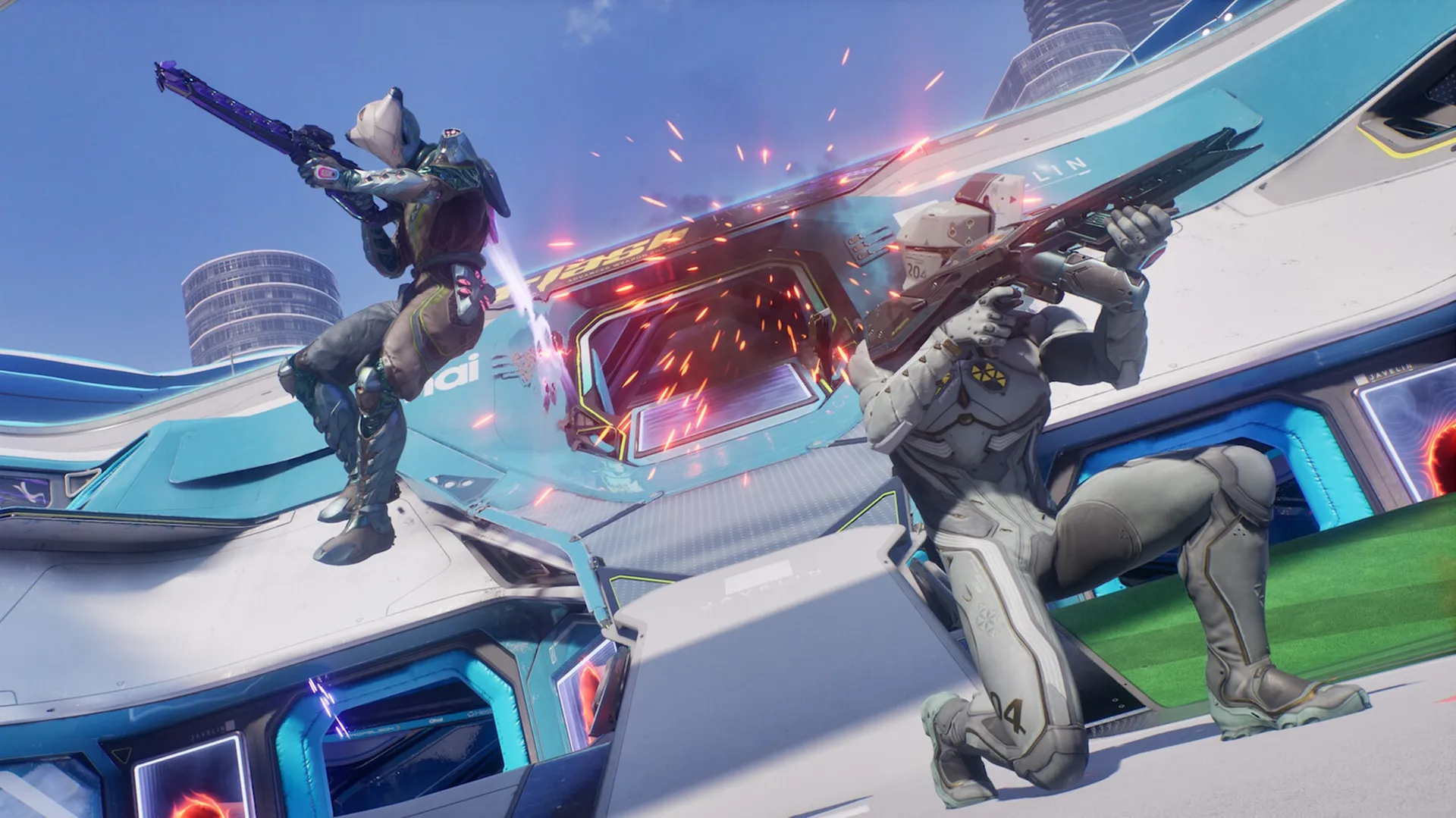
Let’s begin with the undeniable strength: presentation. Built on Unreal Engine 5, Delta Force is stunning. The game’s flagship map, Al-Hadid, a war-torn Middle Eastern city, features destructible walls, dynamic weather, real-time lighting, and ray-traced reflections on water puddles. Character models are detailed down to individual gear straps and mud splatter. Weapon animations—reload sequences, bolt actions, magazine swaps—are meticulously crafted, rivaling Arma Reforger in fidelity.
More impressively, TiMi has optimized the engine remarkably well. On a mid-range GPU like the RTX 3060, the game runs at a stable 60 FPS at 1080p with high settings. Even integrated graphics can achieve playable framerates via scalable presets. This accessibility is crucial for a free-to-play title aiming for mass adoption.
However, visual fidelity doesn’t always serve gameplay. Overly dramatic lighting during sandstorms or night ops can obscure enemies. Some textures pop in late during fast vehicle chases. And while character models look great in cutscenes, their in-game hitboxes sometimes feel misaligned—a critical flaw in a tactical shooter where shot registration must be pixel-perfect.
Core Gameplay: Three Modes, Three Philosophies
Delta Force offers three primary modes, each reflecting a different design ethos:
1. Black Market (PvEvP Extraction)
The marquee mode. Up to 32 players drop into a massive map, scavenge gear, complete contracts, and extract valuable loot—all while contending with AI patrols and rival squads. Sound familiar? Yes, it’s Tarkov-inspired, but streamlined.
Gone are Tarkov’s punishing inventory management and limb-specific damage. Here, health is segmented (head, torso, limbs) but heals automatically over time with medkits. Inventory uses a grid system, but item sizes are simplified. The goal is clear: reduce friction without sacrificing tension.
It mostly works. Scavenging feels rewarding, and the risk-reward loop of pushing deeper into hot zones for better loot is compelling. However, the AI remains underwhelming—scripted patrol routes, poor flanking behavior, and inconsistent difficulty scaling make them more obstacle than threat. Worse, server tick rates (often 30–40 Hz outside Asia) lead to occasional hit registration issues during firefights.
2. Stronghold (Co-op PvE)
A class-based, objective-driven mode where four-player squads assault enemy bases. Think Rainbow Six Siege meets Deep Rock Galactic. Players choose roles—Assault, Recon, Support, Medic—each with unique gadgets and abilities.
This is where Delta Force shines brightest. Mission design is creative: disable SAM sites under artillery fire, rescue hostages in collapsing buildings, hack comms while fending off waves. Coordination is essential, and success feels earned. The absence of PvP removes toxicity, making it ideal for casual teams.
Yet balance issues persist. The Medic’s revive ability has a short cooldown, trivializing death. The Recon’s drone can spot enemies through walls if upgraded, breaking immersion. TiMi has patched some exploits, but the meta still favors gadget spam over tactical movement.
3. Frontline (64v64 Conquest-Style PvP)
TiMi’s attempt at Battlefield-scale warfare. Two teams fight for control points across multi-kilometer maps featuring drivable tanks, helicopters, and UAVs.
On paper, it’s thrilling. In practice, it’s chaotic. Vehicle spawns are unbalanced—attack helicopters dominate early, while tanks arrive too late. Infantry often feel irrelevant amid aerial bombardment. Worse, netcode struggles with so many entities; rubber-banding and projectile desync are common.
That said, when it works—when a coordinated squad calls in artillery on a captured base while flanking through smoke—it delivers unmatched scale and spectacle. But those moments are rare, buried under systemic instability.
Progression & Monetization: The Live-Service Tightrope
As a free-to-play title, Delta Force relies on a dual-currency economy:
Credits: Earned in-game, used for basic weapons and gear.
Diamonds: Premium currency (purchasable or grinded slowly), used for cosmetics, battle passes, and weapon blueprints.
Crucially, no pay-to-win mechanics exist. All combat-effective items are earnable through play. This is commendable—and likely a response to Western backlash against predatory monetization.
The battle pass offers cosmetic skins, emotes, and XP boosts. Weapon customization is deep: barrels, scopes, grips, ammo types—all affecting recoil, sway, and ballistics. But unlocking top-tier attachments requires significant grinding or seasonal purchases.
The real issue lies in progression pacing. Early levels fly by, but post-Level 50, advancement slows to a crawl. Combined with RNG-based loot drops in Black Market, this creates frustration. Players report needing 20+ hours to unlock a single high-end optic—a design choice that feels less “tactical” and more “retention-driven.”
Sound Design & Immersion: Authenticity with Caveats
Audio is a highlight. Gunfire is weighty and spatially accurate—M4s crack differently than AKs, and suppressed shots muffle convincingly. Footsteps on gravel vs. metal are distinguishable. Directional audio helps locate threats, especially with headphones.
Radio chatter is context-aware: “Sniper left!” only plays if a teammate actually spots one. Environmental sounds—distant artillery, howling wind, creaking metal—enhance atmosphere without overwhelming.
But immersion breaks during UI interactions. Menu sounds are oddly arcade-like (whooshes, dings), clashing with the gritty tone. Voice lines repeat quickly, and NPC barks (“Contact front!”) lack variation.
Community & Netcode: A Global Game with Regional Disparities
Delta Force launched with dedicated servers in North America, Europe, and Asia. Ping is generally acceptable (<50ms in-region), but cross-region matchmaking remains problematic. Asian servers run at 60 Hz; Western servers often dip to 30–40 Hz, affecting hit detection.
Community sentiment is polarized. Hardcore mil-sim fans criticize the game for being “Tarkov-lite”—too forgiving, too gamified. Casual players, meanwhile, find the learning curve steep and the stakes too high (losing gear on death in Black Market discourages experimentation).
TiMi’s community management has improved since launch. Regular dev blogs, patch notes, and Reddit AMAs show responsiveness. But major issues—like vehicle imbalance in Frontline or AI predictability—remain unaddressed for months.
The Legacy Question: Is This Really Delta Force?
Herein lies the central tension. The original Delta Force was defined by minimalism, realism, and player agency. This reboot is maximalist, cinematic, and systems-heavy.
There’s no denying TiMi’s technical prowess. But in chasing broad appeal, they’ve diluted what made the franchise unique. Where the 1998 game trusted players to navigate with a paper map and binoculars, the 2025 version overlays waypoints, enemy pings, and objective markers. Where old-school ballistics demanded skill, modern assists (auto-spotting, aim smoothing) lower the barrier.
Is this evolution or betrayal? Perhaps both. The new Delta Force isn’t a successor—it’s a namesake, borrowing prestige while charting its own course.
Final Verdict: A Promising Foundation, Still Under Construction
Delta Force (2025) is a paradox: ambitious yet inconsistent, polished yet shallow, respectful of its roots yet eager to shed them. It excels in presentation and co-op design but falters in PvP balance and progression philosophy. It wants to be everything to everyone—and in doing so, risks satisfying no one fully.
Pros:
Stunning Unreal Engine 5 visuals with strong optimization
Deep weapon customization and authentic sound design
Stronghold mode offers best-in-class co-op tactical action
No pay-to-win; fair monetization model
Large, interactive maps with vehicles and verticality
Cons:
Black Market AI feels outdated and predictable
Frontline mode suffers from netcode and balance issues
Progression grind feels exploitative
Identity crisis between sim and arcade
Regional server disparities affect fairness
Who Should Play It?
Fans of Tarkov seeking a less punishing alternative
Co-op shooter enthusiasts who enjoy objective-based missions
Players with mid-range PCs looking for a visually rich free-to-play title
Those curious about East-meets-West military game design
Who Should Skip It?
Purists expecting a true Delta Force spiritual successor
Competitive PvP players demanding tight netcode and balance
Anyone averse to live-service grinds and seasonal content
Epilogue: The Future of the Franchise
TiMi has confirmed Season 4 will introduce a snow map, new PMC factions, and a revised Black Market economy. Rumors suggest a “Classic Mode” inspired by the 1998 original—featuring no HUD, manual reloads, and true bullet drop—is in internal testing.
If realized, this could bridge the gap between old and new. Until then, Delta Force remains a fascinating experiment: a global studio reinterpreting a Western icon through a modern, mobile-influenced lens. It may not capture the soul of the original—but it might just forge a new one.
And in an industry obsessed with sequels and remasters, that ambition deserves respect—even if it stumbles along the way.